
constructionequipmentmag.com
27
'26
Written on Modified on
Manitowoc unveils new Potain cranes at bauma CHINA 2026
The manufacturer highlights high-capacity lifting solutions, advanced mast technologies, and aftermarket support for emerging markets.
www.manitowoc.com
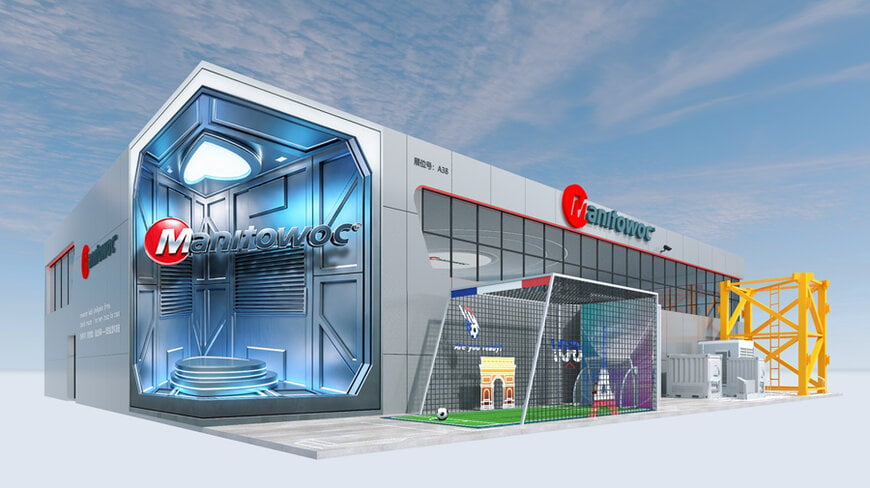
Manitowoc will unveil new crane technologies and aftermarket solutions at bauma CHINA 2026 in Shanghai (Booth A.38). Under the theme “Complete Lifting Solutions. Trusted Every Day,” the company aims to highlight its lifecycle support strategies tailored to the rapidly evolving infrastructure demands of emerging markets. During the exhibition, Manitowoc will officially launch a major high-capacity Potain luffing jib crane and provide an exclusive preview of a next-generation flat-top crane slated for release in 2027.
Lifecycle support and K1000A mast technology
Beyond primary lifting equipment, the showcase will emphasize operational efficiency through digital tools and intelligent jobsite technologies. Innovations on display include the new Ergo Control System (ECS), advanced anti-collision arrays, and Potain Power Solutions designed to optimize energy consumption. On the structural side, Manitowoc will debut the newly developed Potain K1000A mast. Measuring 3.45 m x 3.45 m, this heavy-duty mast serves as a highly efficient alternative to the existing 4 m x 4 m sections. It is specifically engineered to integrate with the popular Potain MCT 2205 flat-top crane and upcoming high-capacity models, maximizing structural rigidity while reducing the crane's installation footprint.
Additional Context: Luffing jibs and flat-top architectures in urban construction
This section details crane structural dynamics and site integration not included in the original press release.
In modern high-rise and dense urban construction, selecting the correct tower crane architecture is critical for safety and site logistics. Flat-top cranes eliminate the traditional "A-frame" tower head and suspension tie-bars, creating a low-profile structure that allows multiple cranes to safely overlap (weathervane) with minimal vertical clearance. Conversely, luffing jib cranes are essential for extremely constrained sites where "air rights" strictly prohibit a crane's jib from swinging over adjacent properties or active roadways. Instead of a trolley traversing a horizontal arm, a luffing crane raises and lowers its entire jib, allowing it to lift heavy loads within a radically reduced slewing radius. The introduction of the 3.45-meter K1000A mast further complements these urban capabilities; by reducing the mast's physical footprint compared to traditional 4-meter sections without sacrificing load capacity, contractors can more easily integrate the crane into tight elevator shafts or narrow building envelopes.
Edited by an industrial journalist, Lekshman Ramdas, with AI assistance.
www.manitowoc.com
