
constructionequipmentmag.com
02
'26
Written on Modified on
Electro-Hydraulic Control in Thirty-Tonne Crawler Excavators
Develon introduces the DX300LC-9 crawler excavator with full electronic hydraulics to enhance fuel efficiency and jobsite safety.
na.develon-ce.com
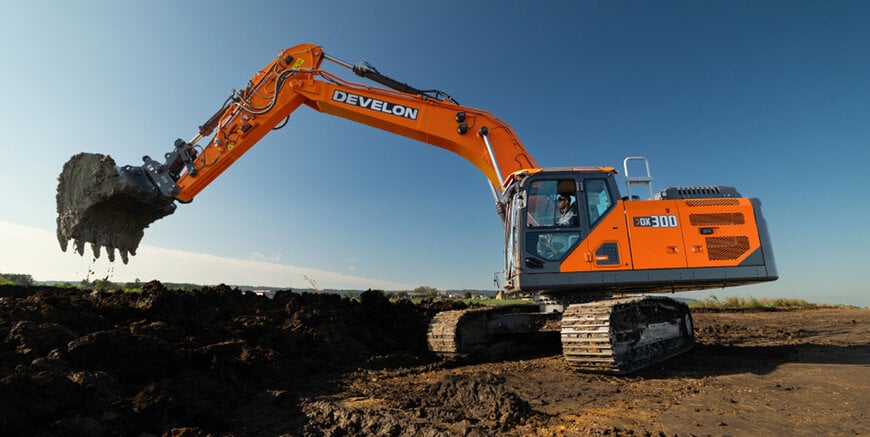
Heavy earthmoving and infrastructure operations face continuous pressure to lower fuel consumption while improving cycle precision and ground-worker safety. Develon expanded its Series 9 machine portfolio by introducing the DX300LC-9, a 32-tonne crawler excavator engineered with full electronic hydraulic architecture and factory-integrated artificial intelligence systems designed to streamline mass excavation, quarrying, and civil construction workflows.
Electro-Hydraulic Architecture and Powertrain Engineering
Conventional crawler excavators rely on pilot hydraulic lines to transmit mechanical inputs from operator joysticks to the main control valve, introducing pressure drops and mechanical lag. The DX300LC-9 replaces traditional hydraulic pilot circuits with a full electronic hydraulic control system. Electronic sensors and solenoid-actuated main spools meter oil flow based on joystick signals, cutting hydraulic pumping losses and delivering up to an 8 percent improvement in fuel efficiency.
The machine is powered by a Develon DX08 diesel engine delivering a net output of 207 kW (278 HP) at 1,800 rpm in accordance with SAE J1349 standards, alongside a peak torque of 1,230 kgf/m at 1,300 rpm. The powertrain delivers high hydraulic flow rates through the primary implement circuits to maximize cycle speeds during combined boom, arm, and bucket operations. In standard front configuration, the excavator achieves a maximum digging depth of 7,305 mm and an operating digging reach of 10,530 mm. For specialized water-management, dredging, and slope-finishing applications, a super long reach variant, designated the DX300SLR-9, extends working reach by one meter compared to the preceding DX300SLR-7 model.
Active Jobsite Safety and Automated Collision Mitigation
Operating heavy machinery in confined utility corridors and dense earthmoving sites presents severe collision and strike hazards. The DX300LC-9 incorporates an active hazard mitigation network combining camera-based machine vision and high-frequency radar detection. A standard Smart Around View Monitor system utilizes six exterior cameras paired with an AI-driven human detection module to deliver a continuous 360-degree field of view to the operator cabin.
The machine integrates the Develon E-Stop mechanism connected to perimeter radar sensors capable of tracking objects at ranges up to 6 meters. If site personnel enter a designated 4-meter hazard zone around the counterweight or working radius, the system automatically intervenes to arrest upper-structure swing or crawler track travel. To mitigate strikes against elevated and subterranean utilities, operators can calibrate Virtual Wall boundaries that electronically restrict boom height, depth, and swing angles before physical contact occurs.
Operator Environment and In-Cab Digital Controls
Cabin acoustic isolation reduces interior operator sound pressure to 67 dBA, establishing the lowest noise exposure rating within the 30-tonne excavator segment by an average margin of 3 dBA. Inside the pressurized cab, primary machine operations interface through a 12-inch high-resolution touchscreen that can be expanded to a dual-monitor display to control heating, ventilation, air conditioning, and multi-attachment flow profiles. Ergonomic stick steer and thumbwheel steering inputs can be assigned directly to the joysticks to reduce repetitive pedal actuation in narrow spaces.
Digital machine assistance functions automate routine tasks to limit structural wear and operator fatigue:
- Advanced Lift Assist calculates live load metrics against a dynamic lifting-force table, warning the operator of tipping risks across uneven ground.
- Breaker Assist eliminates hydraulic blank firing during demolition cycles and incorporates an automated hammer cycle to relieve continuous hand pressure on control switches.
- Integrated Weighing System measures bucket payloads in real time, preventing road-transport overload penalties on articulated haulers and highway dump trucks.
- Machine Guidance integration accommodates optional factory 2D grading systems and supports full aftermarket or factory 3D machine control for multi-plane terraforming models.
Predictive Maintenance and Connected Telematics
Component health management is tracked through an optional Prognostics and Health Management system. The baseline architecture monitors engine oil degradation, hydraulic oil cleanliness, and operating parameters on the main pump and swing drive. An upgraded diagnostic package incorporates specialized vibration and pressure sensors directly on the reduction gearbox, swing motor, and primary pumps to detect mechanical bearing wear and cavitation prior to catastrophic component failure. Fleet access and operator authentication operate via a Bluetooth digital key within the My Develon telematics platform, enabling keyless entry, remote engine preheating, and climate configuration.
Typical Industrial Deployments
The 32-tonne operating weight of the DX300LC-9 positions the machine within core medium-to-heavy industrial sectors. It provides sufficient crowd and breakout force for rock handling, mass overburden removal, foundation trenching, and commercial demolition, while remaining within manageable road-transport transport envelope dimensions compared to 40-tonne to 50-tonne machines.
According to Stephane Dieu, Product Manager for Develon Excavators in Europe, the 30-tonne segment bridges the operational gap between utility infrastructure and heavy extraction:
"With the DX300LC-9, we are continuing to build on the success of our Series 9 line-up with another machine that allows our customers to improve their productivity, precision, safety and uptime protection. The suite of integrated technology, including the standard 360-degree Smart Around View Monitor camera, optional Advanced Lift Assist system, remote smartphone start, factory 2D grading and real-time oil diagnostics, keeps operators working safely and productively. Thirty tonne class excavators like the DX300LC-9 are typically used for mass earthmoving and site development, utility and underground infrastructure work, civil and transportation projects, demolition, quarrying and material handling. They are powerful enough to handle heavy digging and demolition, yet are easier to transport than machines in the 40-50 tonne range and larger."
Additional Context:
This section details technical specifications and competitive benchmarking not included in the original product announcement.
The transition from hydraulic pilot controls to full electro-hydraulic architectures represents an industry-wide engineering shift across the 30-tonne excavator class. In benchmark platforms such as the Caterpillar 330 Next Gen, electro-hydraulic main valves eliminate hydraulic pilot lines, delivering implement flow up to 560 L/min with an engine output of 205 kW (275 hp). Similarly, the Komatsu PC290LC-11 operates with an output of 147 kW (196 hp) utilizing closed-center load-sensing hydraulics, while the Volvo EC300E delivers 180 kW (241 hp) gross output with hydraulic pump capacity rated at 2 x 276 L/min.
At 207 kW net output and an operating weight of approximately 32.3 tonnes, the DX300LC-9 sits at the upper power threshold of the 30-tonne category, pairing high-displacement hydraulic pumps with digital metering to support heavy hydraulic attachments such as shears, grapples, and breakers. The inclusion of automated swing-limiting radar emergency stop systems aligns with emerging European jobsite safety guidelines and ISO 12117-2 earthmoving safety frameworks, which increasingly mandate active pedestrian detection over passive acoustic reverse alarms on large civil engineering sites.
Edited by Natania Lyngdoh, Induportals editor, with AI assistance.
www.develon-ce.com
