
constructionequipmentmag.com
05
'26
Written on Modified on
Manitowoc Supports Italy's Hydropower Plant Modernization
Cogeis selected a high-capacity tower crane to streamline penstock installation and material logistics during a long-term hydropower upgrade project.
www.manitowoc.com
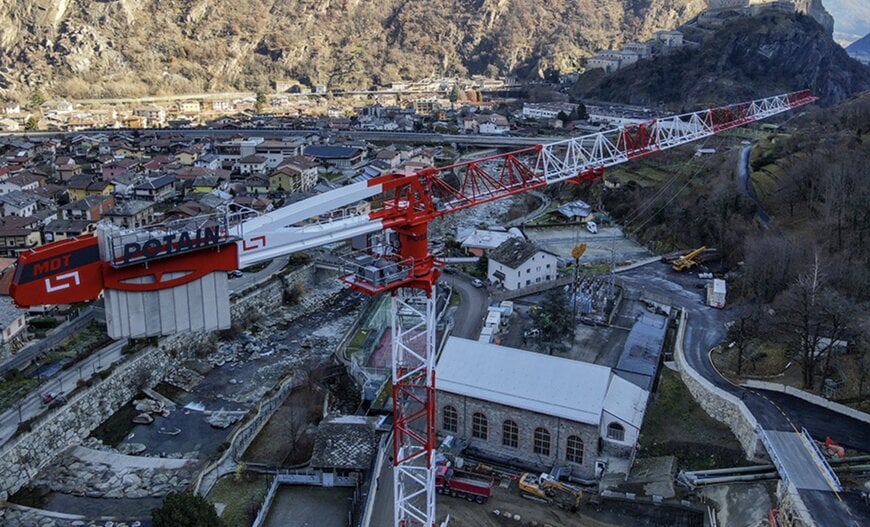
A major modernization project at the Hone hydroelectric power plant in Italy's Aosta Valley is using a Potain MDT 269 topless tower crane from Manitowoc to support the reconstruction of key energy infrastructure. The project, led by contractor Cogeis, aims to increase annual electricity production from 50 GWh to 100 GWh while upgrading critical components of a facility that has operated for more than a century.
Operational Challenges in Alpine Environments
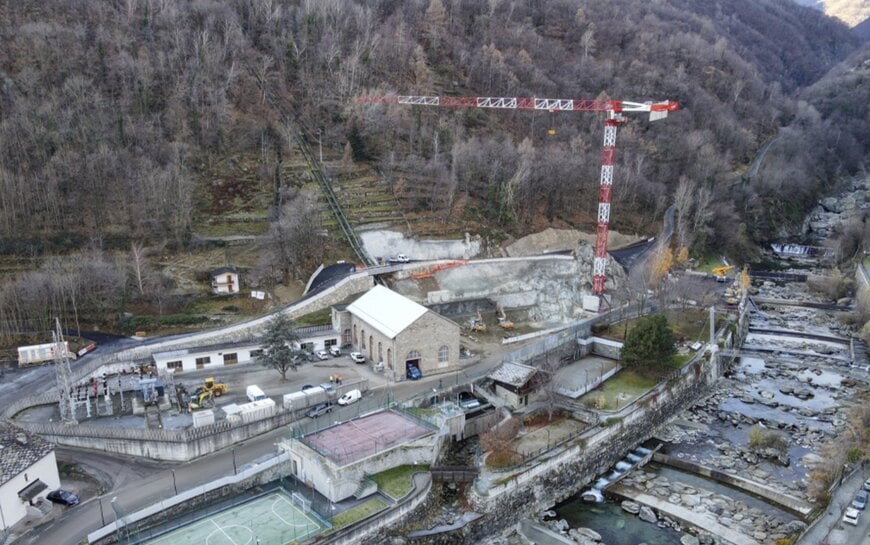
The modernization of the century-old Hone hydroelectric facility in the Aosta Valley requires a complete reconstruction of the intake structure and power plant, alongside the excavation of an 8-kilometer tunnel. A central engineering challenge of the project is the installation of a new high-capacity penstock. Operating in an alpine terrain introduces severe space constraints, limited assembly areas, and restricted access roads that complicate the transport and handling of heavy structural components. To maintain project productivity, the primary operational objective was to eliminate intermediate material handling and transfer stages between the storage yard and the construction cableway.
Technical Configuration and Equipment Selection Criteria
To address these logistical constraints, Cogeis selected a Potain MDT 269 topless tower crane. The equipment configuration features a maximum lifting capacity of 12 tonnes, a 65-meter jib length, and a hook height of 50 meters. At the maximum jib radius, the crane retains a lifting capacity of 3.1 tonnes, which provides the necessary coverage to transport heavy penstock sections directly from the storage zone to the cableway without secondary repositioning.
Several technical mechanisms justified the selection of this specific model, including the onboard Crane Control System (CCS), which provides rapid electronic configuration and advanced load-management functions to maximize lifting safety. Additionally, the crane's modular design allows it to be transported and assembled efficiently within restricted mountain passes. Dual operating configurations, encompassing an Ultra View cab and remote-control options with adjustable speed settings, allow operators to adapt control sensitivity based on wind conditions and load variables. Furthermore, fleet interchangeability enabled Cogeis to utilize existing mast sections from its current equipment inventory, reducing the cost and logistics of transporting additional structural components to the high-altitude site.
Deployment Logistics and Lifecycle Support
The deployment phase commenced with crane assembly and commissioning, which was completed with on-site technical supervision from Manitowoc and its regional dealer, Fissolo Gru. Because the project spans from its initiation in July 2025 through a scheduled completion in 2028, the providers instituted an ongoing technical assistance framework. This infrastructure includes dedicated maintenance schedules and a standardized spare-parts supply chain to guarantee equipment uptime throughout the multi-year construction lifecycle. Following the completion of the Hone project, the crane's modular architecture is slated for redeployment to other regional infrastructure tasks, including the planned Cervinia 3S ropeway.
Quantifiable Engineering Impacts
The integration of the topless tower crane directly resolved the site's logistical bottlenecks. By enabling direct-line transfers of the penstock segments, the crane eliminated multiple intermediate handling phases, reducing the ancillary labor and material-handling equipment required on-site. Mechanically streamlining these logistics supports the overarching project goal: upgrading the infrastructure to double the plant's annual electricity generation from 50 gigawatt-hours to 100 gigawatt-hours by 2028, thereby significantly expanding the region's clean energy output.
Edited by Aishwarya Mambet, Induportals Editor, with AI assistance.
www.manitowoc.com
